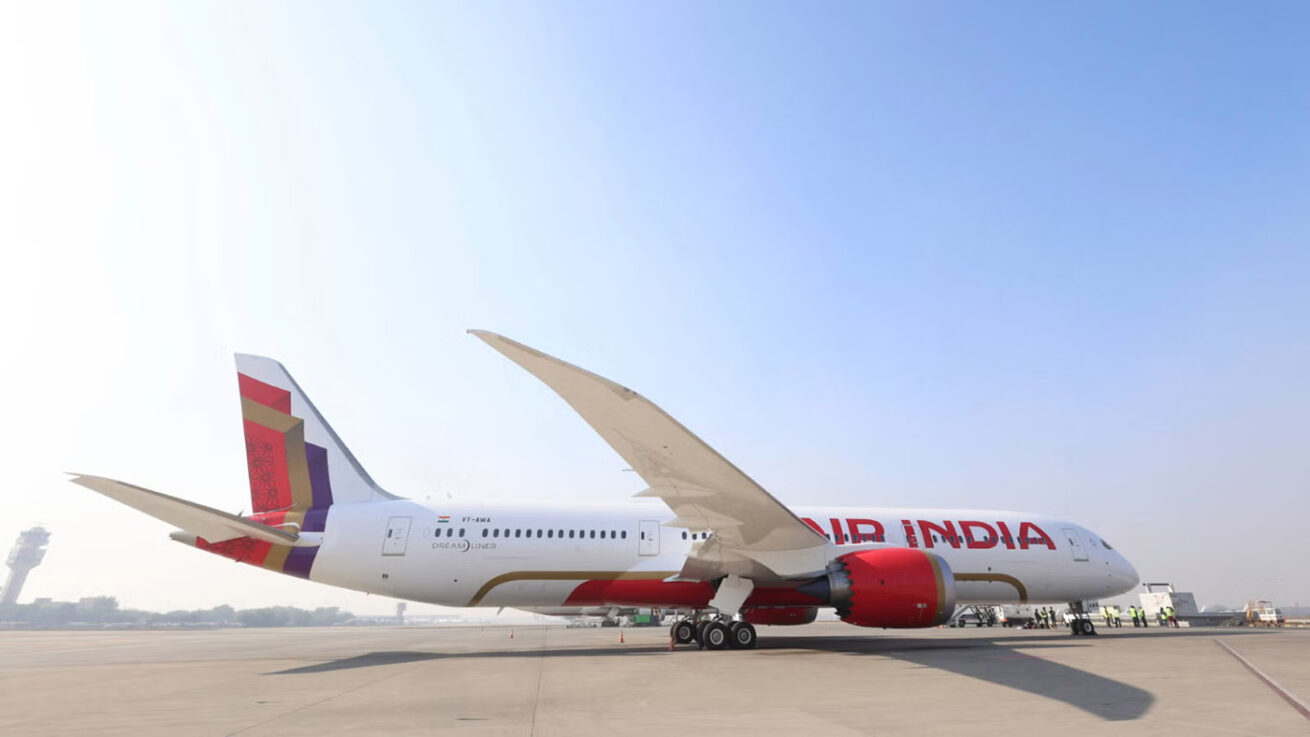
2026 delivered a defining moment for Air India. The airline’s VT-AWA, its first factory-built line-fit Boeing 787-9 Dreamliner, touched down in Delhi. It arrived at Indira Gandhi International Airport after a non-stop ferry flight of 16 hours and 58 minutes from Boeing’s Everett facility in Washington State. As a result, Air India has introduced a milestone aircraft with a ready-to-serve cabin from day one.
What Makes This Arrival So Special?
1) Purpose-built cabin interiors
To begin with, this Dreamliner was completed with its bespoke cabin on Boeing’s production line. Unlike retrofits, the aircraft features three classes installed at source: Business, Premium Economy, and Economy. Consequently, Air India gains cabin consistency, premium finish quality, and stable service standards immediately.
2) Fleet modernisation in full swing
Meanwhile, this induction aligns with Air India’s wider transformation under Tata Group stewardship. In 2026, six widebody aircraft are scheduled to arrive, including Airbus A350-1000s and additional 787-9s. In parallel, 26 legacy 787-8s are undergoing interior retrofits and receiving new liveries. Therefore, by year-end, nearly 60 percent of the widebody fleet is expected to feature refreshed cabins.
Smooth Path to Commercial Service
Looking ahead, VT-AWA is anticipated to enter long-haul international service in February 2026. In addition, Air India plans to announce specific routes soon. Therefore, the aircraft will strengthen the global network with extra capacity and improved comfort. Notably, the line-fit interior supports a polished passenger experience from the very first flight.
Cabin Configuration Overview
For clarity, here is a simple view of the layout.
- Total seats: 296.
- Business Class: premium orientation for a higher-comfort long-haul experience.
- Premium Economy: enhanced comfort with competitive pricing.
- Economy: value-oriented seating for broad network deployment.
As a result, the mix balances comfort, density, and economics on key intercontinental routes.
Line-fit: Why It Matters
- Factory-fitted consistency: uniform cabin design across 787-9s simplifies training, maintenance, catering, and parts provisioning.
- Faster entry into service: with interiors already installed, the aircraft moves quickly from delivery to commercial operations.
- Reliable, certified design: factory installation streamlines certification and documentation, which, in turn, supports operational reliability.
Consequently, line-fit choices reduce programme risk and improve day-one readiness.
A New Chapter for Air India
In practice, Air India is accelerating its fleet upgrade on two tracks: line-fit inductions and comprehensive retrofits. Together, these efforts signal a firm commitment to global competitiveness. Moreover, the debut of VT-AWA is more than an aircraft arrival. It is a statement of intent to deliver world-class passenger experiences, aligned with the airline’s broader transformation plan.
Final Takeoff
With its first line-fit 787-9, Air India is on track to elevate long-haul services from early 2026. Expect sleeker interiors, more efficient operations, and smoother flights across key international routes. In short, VT-AWA sets a clear benchmark for quality, consistency, and comfort on Air India’s next phase of growth.
