
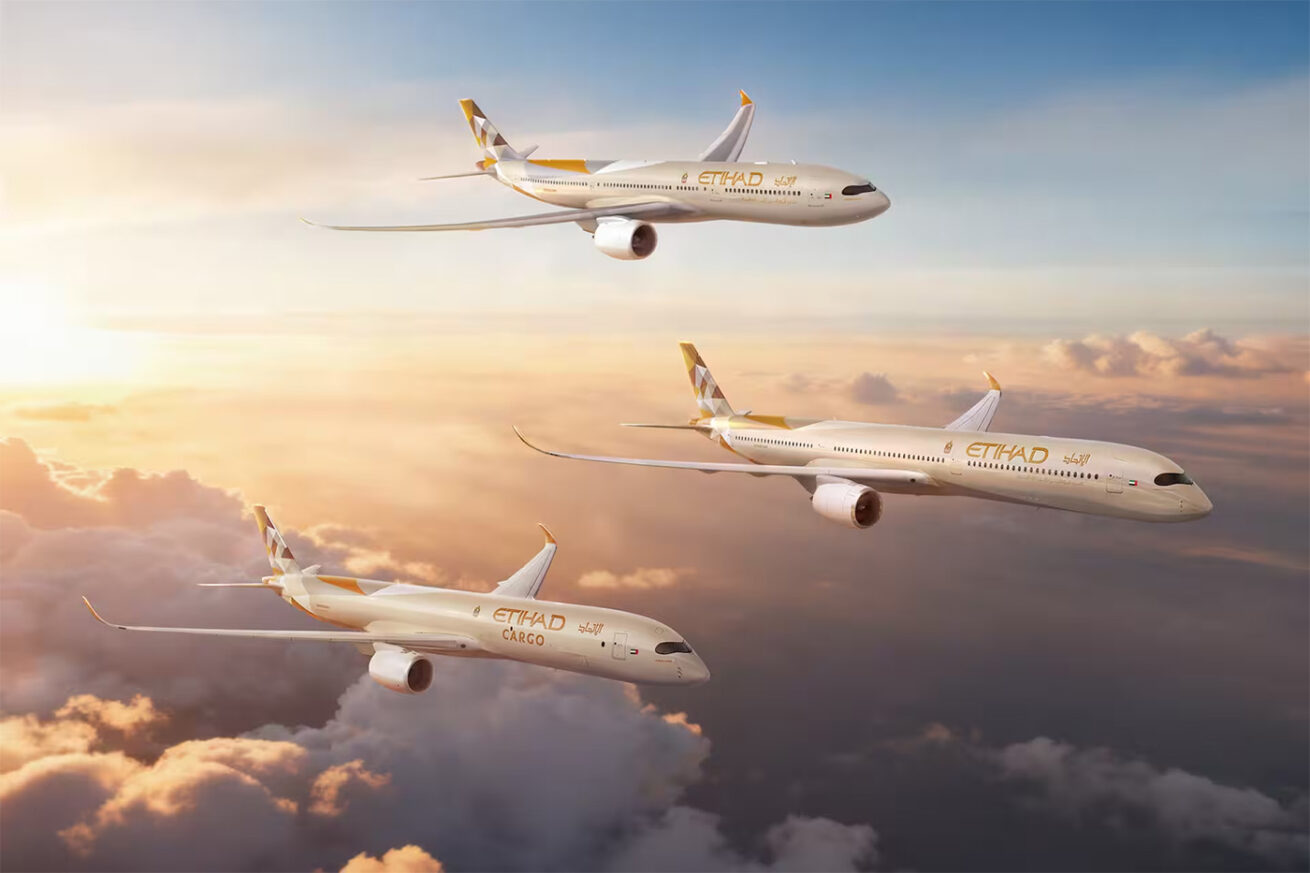
Etihad Airways has announced a major expansion to its long‑haul network. The Etihad Airbus widebody order adds 32 new aircraft, and as a result, the airline continues to rank among the fastest‑growing full‑service carriers worldwide. Moreover, this order increases its total widebody commitments for the year to 60 aircraft. It also follows an earlier purchase of 28 Boeing jets, which further strengthens Etihad’s long‑term strategy.
Early delivery slots enhance the impact of the Etihad Airbus widebody order
The new Airbus deal includes A350‑1000s, A350F freighters and A330‑900s. Etihad secured them through direct purchases and lease agreements. Deliveries will begin in 2027. Consequently, the airline gains access to some of the earliest widebody delivery slots available. In today’s market, long‑haul aircraft backlogs often stretch more than a decade. Therefore, securing early slots highlights Etihad’s ability to act quickly, while also ensuring long‑term fleet stability.
Agility remains essential in a constrained global market
The airline’s fast execution demonstrates its agile approach to fleet growth. Supply constraints remain significant worldwide. However, by locking in rare early delivery positions, Etihad protects its future expansion and avoids delays that could affect its long‑term plans. In addition, the order positions the airline for continued growth across both passenger and cargo operations over the coming years.
How the Etihad Airbus widebody order boosts flexibility
The combined aircraft order offers several advantages for Etihad’s network.
A350‑1000 strengthens premium long‑haul routes
These aircraft will support Etihad’s long‑distance operations and, furthermore, will enhance the premium travel experience.
A350F expands Etihad Cargo capabilities
The freighter model will help meet rising global freight demand. Additionally, it will support Abu Dhabi’s ambitions to grow as a logistics and trade hub.
A330‑900 improves mid‑haul and regional balance
This aircraft will bridge key network gaps. Moreover, it provides added flexibility while Etihad awaits future widebody deliveries.
As a result of this order, Etihad will operate the full Airbus widebody family. This includes the A380, the A350 variants and the A330neo, in addition to its growing Boeing fleet.
Leadership highlights the importance of the Etihad Airbus widebody order
Etihad Airways CEO Antonoaldo Neves said:
“Securing 32 additional widebodies, with deliveries beginning in 2027, shows our ability to move fast, secure scarce delivery positions and stay ahead of global capacity constraints. These commitments support our growth plans, enhance the premium experience and bring more visitors to Abu Dhabi.”
He added that these investments reflect strong confidence in Abu Dhabi’s future as a major global aviation hub.
Next‑generation passenger experience across the fleet
All new aircraft will feature Etihad’s next‑generation cabin products. They include upgraded First and Business suites, enhanced Economy seating and Viasat high‑speed internet. Additionally, the airline’s ongoing retrofit programme ensures a consistent passenger experience across the fleet. Consequently, customers will receive a more modern and unified onboard product.
Airbus expresses support for the Etihad Airbus widebody order
Benoît de Saint‑Exupéry, EVP Sales at Airbus, said:
“Etihad Airways’ continued investment in our latest widebody aircraft highlights the strength of our partnership and our shared vision for the future of aviation in the UAE and beyond.”
Furthermore, Airbus noted that Etihad’s long‑term growth strategy aligns with its own commitment to efficiency and innovation.
One of the world’s most modern and efficient long‑haul fleets
With 60 new widebody aircraft ordered across Airbus and Boeing this year, Etihad is on track to operate one of the world’s most modern and flexible long‑haul fleets. In addition, the Etihad Airbus widebody order supports Abu Dhabi’s growing global connectivity ambitions. Ultimately, this expansion reinforces Etihad’s commitment to sustainability, premium service and long‑term operational efficiency.
