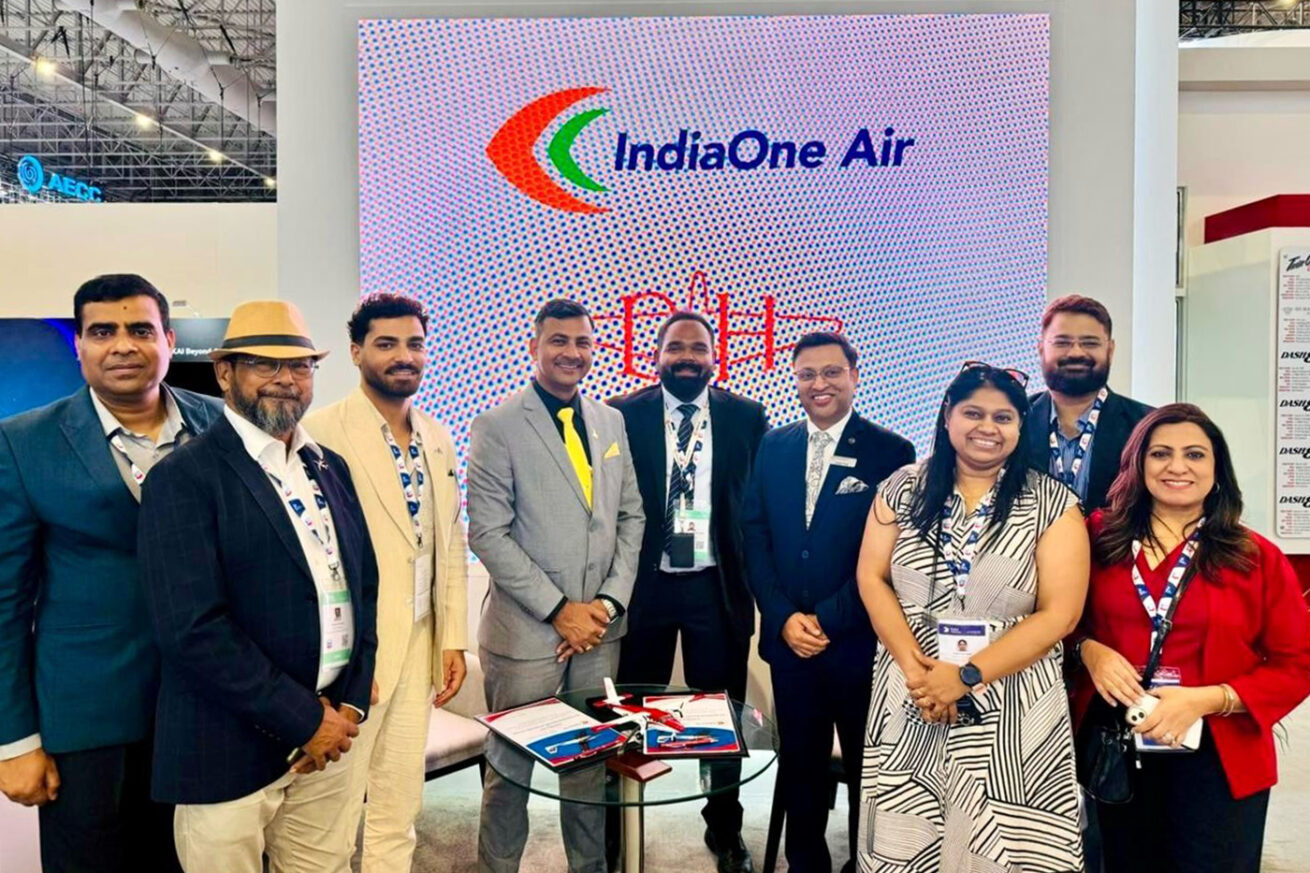
IndiaOne Air announced a landmark step at the 2025 Dubai Airshow. The airline signed a Letter of Intent for 10 De Havilland Canada Twin Otter Series 300‑G aircraft. As a result, IndiaOne Air is preparing to reshape regional connectivity across India. In particular, the new aircraft will help the airline serve Tier 2 and Tier 3 cities with reliable and efficient flights.
About IndiaOne Air
To begin with, IndiaOne Air was founded in 2020 and is headquartered in Ahmedabad, Gujarat. The airline has a clear mission. It wants to bridge the gap between big metros and India’s heartlands. Moreover, it started operations in August 2022. Notably, it became the first scheduled airline in India to operate single‑engine aircraft.
Key Highlights
Current fleet
- IndiaOne Air operates Cessna Grand Caravan EX aircraft.
- These aircraft are known for reliability and efficiency on short routes.
- In addition, the cabins offer generous seat pitch for a premium feel.
Safety and technology
- The airline equips its aircraft with black‑box recorders and Garmin G1000 NXi avionics.
- Consequently, the fleet supports GAGAN‑based navigation for all‑weather operations.
Network
- The airline serves routes across Odisha, Jharkhand, Chhattisgarh, West Bengal, and Andhra Pradesh.
- For example, it flies to Bhubaneswar, Jeypore, Raipur, Jamshedpur, Kolkata, and Visakhapatnam.
- Therefore, the network already covers several key regional centres.
Vision and mission
- IndiaOne Air aims to democratise air travel and promote local tourism.
- It also supports economic growth by connecting remote regions.
- Its tagline, “New Wings of Bharat”, reflects a strong focus on inclusive aviation.
Why the Twin Otter 300‑G?
The Twin Otter 300‑G is the latest version of a proven regional platform. It offers short take‑off and landing capability, rugged reliability, and strong performance in tough environments. Consequently, it is well suited to India’s diverse terrain and smaller airstrips. In practical terms, it enables IndiaOne Air to reach destinations that have long lacked air connectivity.
Furthermore, the 300‑G features advanced avionics, better efficiency, and improved passenger comfort. As a result, it aligns with IndiaOne Air’s vision of “connecting the unconnected”. In addition, the expansion will support essential air services under the Government of India’s UDAN scheme. Therefore, more people will gain affordable and accessible air travel.
Leadership Speaks
Wing Commander Prem Kumar Garg (Retd.), CEO of IndiaOne Air, underlined the strategy. He noted that the Twin Otter 300‑G’s performance and versatility match the airline’s mission to connect remote regions. In the same way, promoters Shaishav Shah and Himanshu Shah highlighted the airline’s role in supporting UDAN and equitable air access. Together, these statements reinforce the long‑term plan.
What This Means for Regional Aviation
IndiaOne Air’s move is more than a fleet upgrade. It is a game‑changer for regional connectivity. By opening access to smaller airports and remote destinations, the airline can drive local progress. For example, it can support:
- Economic development in interiors,
- Tourism growth in culturally rich regions, and
- Social inclusion through faster access to healthcare, education, and markets.
Consequently, the benefits extend well beyond aviation.
IndiaOne Air vs Other Regional Carriers
India’s regional market is growing under the UDAN scheme. Meanwhile, carriers such as FlyBig, Star Air, and Alliance Air also target underserved cities. However, IndiaOne Air’s approach stands out in three ways.
1) Fleet strategy
- IndiaOne Air: focuses on small, versatile aircraft like the Cessna Grand Caravan EX and the Twin Otter 300‑G. Therefore, it can use short runways and remote airstrips, which expands reach into the heartlands.
- FlyBig and Star Air: operate larger turboprops and regional jets, such as the ATR 72 and Embraer ERJ. As a result, they often need longer runways and higher loads to stay profitable.
- Alliance Air: uses ATR aircraft on many government‑backed routes. However, it has less flexibility for ultra‑remote destinations.
2) Operational model
- IndiaOne Air: became India’s first scheduled single‑engine operator. Consequently, it can offer low‑cost, high‑frequency links on thin routes. This lean model reduces operating costs and supports sustainable service.
- FlyBig and Star Air: focus on corridors with moderate demand. Therefore, they often avoid ultra‑low‑density routes due to higher costs.
- Alliance Air: relies more on subsidies and legacy infrastructure. Hence, it is less agile than newer entrants.
3) Market positioning
- IndiaOne Air: positions itself as “New Wings of Bharat” with a focus on inclusion and community uplift. In particular, the Twin Otter 300‑G supports deeper penetration into remote geographies.
- FlyBig and Star Air: present affordable options for regional travel. However, they do not match the same level of reach into sparsely served areas.
- Alliance Air: benefits from Air India heritage and trust. Nevertheless, it faces challenges with modernisation and efficiency.
Looking Ahead
With this milestone, IndiaOne Air is poised to become a leading regional carrier. It plans to set benchmarks for safety, reliability, and customer experience. Furthermore, the airline remains focused on a clear promise. It wants to make India fly from the inside out. In short, the Twin Otter 300‑G order strengthens that promise and prepares the network for wider impact.
