
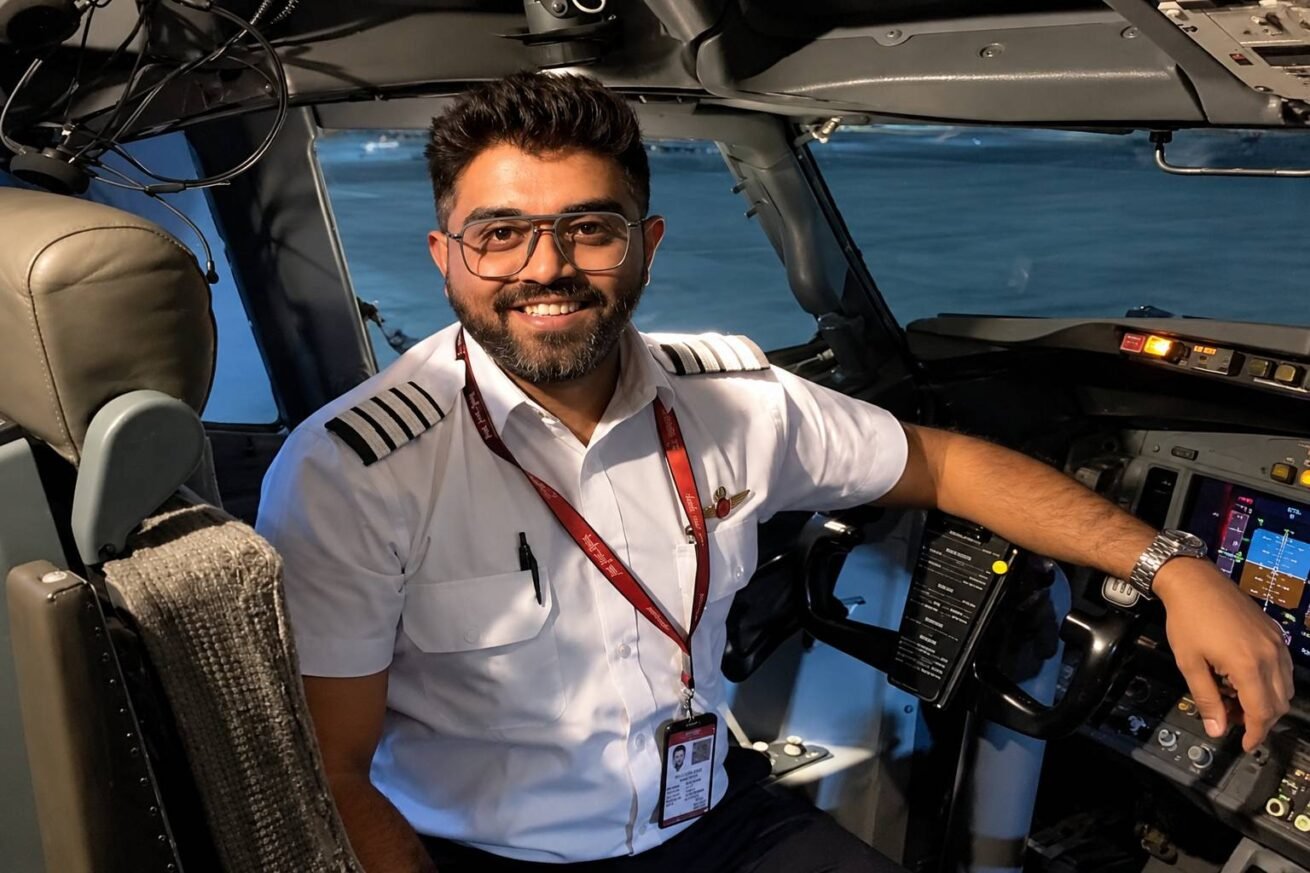
Captain Smit Machchhar showed great courage during a serious emergency on flydubai Flight FZ1073. His actions reportedly helped protect 174 people on board. The flight was travelling from Dubai to Tel Aviv on 30 September 2026. A serious fight took place inside the cockpit during the journey. Captain Machchhar suffered major injuries. Yet, he reportedly managed to open the locked cockpit door. This allowed crew members and other pilots on board to enter the cockpit.They soon brought the situation under control. The aircraft then diverted to Tabuk in Saudi Arabia, where it landed safely. All passengers and crew members were safe and accounted for after the landing. Captain Machchhar’s actions have earned praise from across the world. His story also shows the value of pilot training, teamwork and calm thinking during an emergency.
Who Is Captain Smit Machchhar?
Captain Smit Machchhar is an Indian commercial pilot from Mumbai. He has years of experience flying Boeing 737 aircraft. Before joining flydubai, he worked at SpiceJet for around 11 years. He joined the Indian airline in June 2011. Machchhar began his career as a commercial pilot. He later became a senior commander and line-training captain. A line-training captain trains and checks other pilots during commercial flights. The role requires strong technical knowledge and flying skills. It also requires clear communication and sound judgement. Reports suggest that Machchhar has flown for almost 9,750 hours on Boeing 737 aircraft. His experience includes the Boeing 737-800 and the Boeing 737 MAX. He joined flydubai as a direct-entry captain in June 2022. Airlines recruit direct-entry captains from other carriers. These pilots already have years of command experience. They can therefore join the new airline at the rank of captain.
What Happened on flydubai Flight FZ1073?
flydubai Flight FZ1073 departed from Dubai International Airport on 30 September 2026. It was travelling to Ben Gurion International Airport near Tel Aviv. During the flight, a serious fight reportedly broke out between the two pilots. The aircraft then began to lose altitude. It also sent emergency signals through its transponder. Reports stated that the aircraft first used code 7700. Pilots use this code to signal a general emergency. The aircraft later used code 7500. This code can alert air traffic controllers to unlawful interference on board. The flight was carrying 174 people at the time. Reports said the co-pilot attacked Captain Machchhar inside the cockpit. The exact reason for the attack was not clear. Authorities launched an investigation to establish the facts. The aircraft reportedly lost a large amount of altitude during the incident. Captain Machchhar also suffered serious injuries. Despite his condition, he reportedly fought back and opened the cockpit door. This action allowed people outside the cockpit to enter and help. flydubai confirmed that a fight took place inside the flight deck. The airline said that its crew members travelling on the flight secured the aircraft. The crew then diverted the aircraft to Tabuk Airport in Saudi Arabia. It landed there safely.
Why Opening the Cockpit Door Mattered
Modern passenger aircraft have strong and secure cockpit doors. These doors protect pilots and aircraft controls from outside threats. The doors remain locked for most of the flight. Only authorised crew members can enter the cockpit. This safety measure created a challenge during the FZ1073 emergency. The threat reportedly came from inside the cockpit. People outside could not enter while the door remained locked. Captain Machchhar reportedly opened the door after he suffered injuries. This decision changed the course of the emergency. Crew members, passengers and trained pilots could then enter the flight deck. They reportedly restrained the alleged attacker and secured the cockpit. Other pilots who were travelling on the aircraft then took control. They helped divert the flight to Saudi Arabia. Several people played a part in the safe outcome. Captain Machchhar opened the door. Crew members and passengers helped control the threat. Other pilots managed the aircraft. Air traffic controllers also helped guide the flight. Emergency teams at Tabuk Airport prepared for its arrival. Their combined response helped bring the aircraft safely to the ground.
Emergency Landing at Tabuk Airport
The crew diverted FZ1073 to Prince Sultan bin Abdulaziz International Airport in Tabuk. Airport officials received a distress call from the flight. They quickly activated their emergency plans. The airport prepared medical teams and other support services before the aircraft arrived. The pilots landed the aircraft safely. Emergency teams then helped the people on board. Medical staff took both pilots to hospital. Airport teams assisted the passengers inside the terminal. flydubai also arranged replacement aircraft and further travel support. The response showed why airports need strong emergency systems. An aircraft may divert for many reasons. These can include bad weather, a medical emergency, a technical fault or a security threat. Airports along major flight routes must remain ready for such events. In this case, Tabuk Airport played an important role in the emergency response.
Captain Smit Machchhar’s Health
Medical teams took Captain Machchhar to a hospital in Tabuk after the landing. The Indian Embassy in Riyadh said that he was receiving medical care. Early reports described his condition as stable. The embassy also worked with the Consulate General of India in Jeddah. Both offices monitored his health and remained in touch with his family. Indian officials also worked with the Saudi authorities to support him. Reports suggested that Captain Machchhar suffered serious injuries during the cockpit fight. However, initial updates said that he was stable. His family, friends and colleagues continue to hope for his full recovery.
From Textile Studies to Aviation
Captain Machchhar did not always plan to become a pilot. He first studied textile engineering. At the time, he expected to join his family’s textile business. He later studied management. He wanted to develop the skills needed to help grow the family business. However, an aviation seminar changed his career plans. Machchhar attended the seminar while he was still studying. It introduced him to commercial flying and a possible career as a pilot. He soon developed a strong interest in aviation. At around 19 years of age, he decided to begin flight training. Machchhar later travelled to New Zealand for professional pilot training. He earned the licences and qualifications needed to begin a career in commercial aviation. He also trained to fly Boeing 737 aircraft. Reports indicate that he completed related training at the Flight Simulation Technique Centre in Manesar, near Gurugram. His story shows that people can find their career path in unexpected ways. A single introduction to aviation changed the direction of his life.
His Career at SpiceJet
Captain Machchhar joined SpiceJet in June 2011. He spent around 11 years with the airline. During this time, he gained wide experience on Boeing 737 aircraft. He operated flights across India and on international routes.Machchhar later became a senior commander. He also took on the role of line-training captain. Training captains guide pilots during live commercial operations. They assess flying skills, communication and decision-making. They also help pilots follow the airline’s safety rules and standard procedures. Machchhar reportedly gained almost 9,750 flying hours on Boeing 737 aircraft. He completed a large share of these hours as pilot-in-command. The pilot-in-command holds final responsibility for the flight. This includes the safety of the aircraft, passengers and crew. Captains must also assess risks, work with air traffic control and guide the crew. They must make quick decisions when an unexpected event takes place. This experience may have helped Captain Machchhar during the FZ1073 emergency.
Joining flydubai as a Captain
Captain Machchhar moved to Dubai and joined flydubai in June 2022. He joined the airline as a direct-entry captain. This meant that flydubai hired him straight into a command role. Airlines usually set strict conditions for direct-entry captains. Pilots must have enough flying hours and command experience. They must also hold the correct aircraft qualifications. Machchhar’s long experience on the Boeing 737 made him suitable for the role. flydubai mainly operates Boeing 737 aircraft. The airline connects Dubai with destinations across Asia, Africa, Europe and the Middle East. His appointment reflected the experience that he had gained during his time at SpiceJet.
Captain Machchhar Receives Global Praise
Leaders, diplomats and aviation professionals praised Captain Machchhar after the incident. Indian Prime Minister Narendra Modi called him a hero. He praised the pilot’s courage and commitment to saving lives. Israeli Prime Minister Benjamin Netanyahu also praised his actions. He said Captain Machchhar helped prevent a major disaster. People across the aviation industry also recognised his calm response. Many noted his ability to act despite his serious injuries. However, several people helped secure the flight. Cabin crew members managed the situation inside the aircraft. Passengers reportedly helped restrain the alleged attacker. Other pilots took control of the aircraft. Air traffic controllers and emergency teams also supported the flight. Captain Machchhar’s reported decision to open the cockpit door allowed this wider response to begin.
What the Incident Means for Aviation Safety
The FZ1073 emergency has raised questions about cockpit safety. Airlines introduced stronger cockpit doors after the attacks of 11 September 2001. These doors stop unauthorised people from entering the flight deck. They provide vital protection when a threat comes from the passenger cabin. However, the situation becomes more complex when a threat starts inside the cockpit. Airlines and regulators may review several areas after the investigation ends. These could include pilot health support and cockpit access rules. They may also study crew monitoring, relief-pilot arrangements and emergency response plans. The incident could renew discussion about the two-person cockpit rule. Under this approach, two authorised people must remain in the cockpit at all times. However, countries and airlines follow different rules. Investigators must first establish the full facts before regulators consider any changes.
Investigation Into the Incident
Authorities in the United Arab Emirates and Saudi Arabia launched investigations into the event. Investigators may study the aircraft’s cockpit voice recorder. This recorder can provide details about sounds and conversations inside the cockpit. They may also review the flight-data recorder. It can show the aircraft’s altitude, speed, direction and control movements. Other evidence may include air traffic control records, medical reports and crew documents. Investigators may also speak with passengers and other crew members. The authorities will need to establish the full sequence of events. They will also seek to understand what caused the fight. Saudi authorities took the alleged attacker into custody after the landing. At the time of the initial reports, officials had not confirmed a motive. flydubai asked people to avoid early conclusions. The airline said that investigators needed time to collect evidence and establish the facts. The airline also suspended its flights to and from Israel while the investigation continued.
The Role of Crew Resource Management
The safe landing of FZ1073 shows the value of crew resource management. Crew resource management teaches aviation professionals to use people, equipment and information in the best possible way. It focuses on teamwork, communication and leadership. It also helps crews maintain awareness and make decisions under pressure. The FZ1073 emergency required support from many people. Cabin crew members had to manage the passengers. Other pilots aboard the aircraft helped control and land it. Passengers reportedly helped restrain the alleged attacker. Air traffic controllers guided the aircraft during the diversion. Emergency teams at Tabuk Airport prepared for its arrival. This teamwork helped the flight reach the ground safely. The event shows that aircraft systems are only one part of aviation safety. Trained people also play a vital role.
A Story of Courage and Presence of Mind
Captain Smit Machchhar’s journey into aviation began with an unexpected career change. He went from studying textiles to flying Boeing 737 aircraft. He later became a commander and training captain. Over the years, he gained thousands of hours of flying experience. That experience may have helped him respond during the FZ1073 emergency. Pilot training cannot cover every possible event. However, it teaches pilots to stay focused and protect lives. It also prepares them to make quick decisions during a crisis. Despite his injuries, Captain Machchhar reportedly opened the cockpit door. This allowed others to enter and help secure the aircraft. The investigation will determine the full sequence of events. It will also examine the reason behind the cockpit fight. For now, the confirmed outcome remains clear. A serious incident took place on flydubai Flight FZ1073. The flight diverted to Tabuk and landed safely. All 174 people on board were accounted for. The incident may become an important case study for the aviation industry. It could offer lessons about cockpit safety, teamwork and emergency response. Most importantly, the story shows how courage and quick thinking can make a vital difference during a crisis.
Frequently Asked Questions
Who is Captain Smit Machchhar?
Captain Smit Machchhar is an Indian commercial pilot from Mumbai. He worked at SpiceJet before joining flydubai in June 2022.
What happened on flydubai Flight FZ1073?
A serious fight took place inside the cockpit on 30 September 2026. The flight was travelling from Dubai to Tel Aviv. The crew diverted the aircraft to Tabuk in Saudi Arabia.
How did Captain Machchhar help?
Despite his injuries, Captain Machchhar reportedly opened the locked cockpit door. This allowed crew members, passengers and other pilots to enter the cockpit and help.
How many people were on the aircraft?
flydubai Flight FZ1073 was carrying 174 people.
Which aircraft operated the flight?
A Boeing 737 MAX 8 operated flydubai Flight FZ1073.
How much flying experience does Captain Machchhar have?
Reports suggest that he has nearly 9,750 hours of flying experience on Boeing 737 aircraft.
What is Captain Machchhar’s health condition?
Early reports said that he was stable and receiving treatment at a hospital in Tabuk.
Has the investigation ended?
No. Authorities are still investigating the incident. They have not yet confirmed the motive behind the cockpit fight.
